What Is a Blowout Taper? The Complete Beginner's Guide
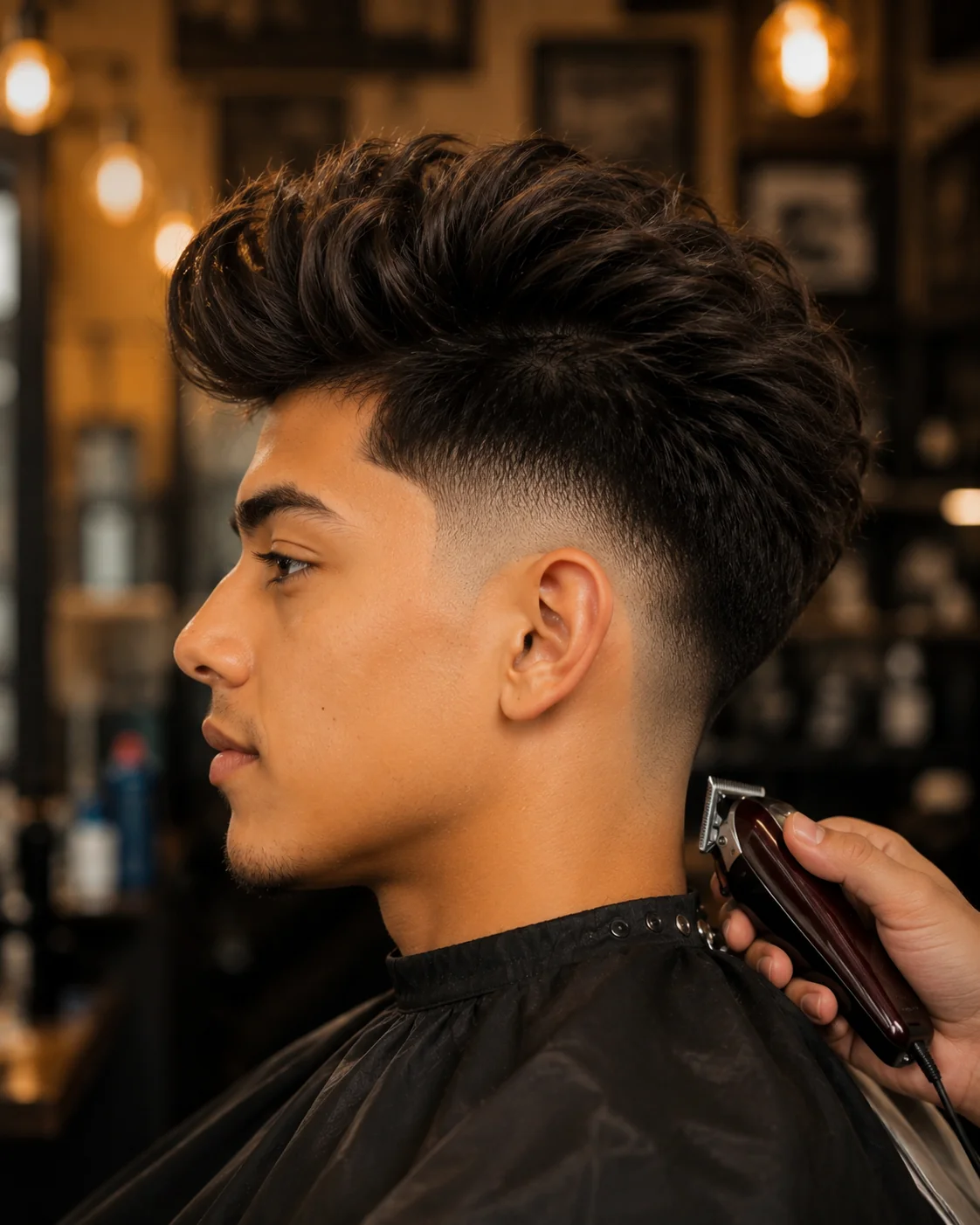
So what is a blowout taper, exactly? It's a men's haircut that combines two separate elements: a taper — hair gradually shortened around the sideburns, ears and neckline — and a blowout top, styled upward and back with a blow dryer for volume and movement. The sides stay tight and clean while the top stays full, which is why the cut photographs so well and why it has taken over barbershop request lists since 2024.
The name confuses people because it sounds like one thing when it's really a formula. The "taper" half describes where the clippers go. The "blowout" half describes what happens after the cut, at the styling stage. You can wear the same taper flat and boring, or blow-dried into that airy, lifted silhouette — only the second one is a blowout taper.
The Two Halves of a Blowout Taper
1. The taper (the cut)
A taper shortens the hair gradually in a small zone: around the sideburns, above the ears, and along the neckline. Unlike a fade, it does not climb the whole side of the head, and it rarely goes down to bare skin. That restraint is the point — the taper frames the cut cleanly while leaving most of the side length intact, so it grows out softly instead of looking overgrown in week two.
2. The blowout (the styling)
The top is left long — usually 3 to 6 inches — and cut with texture so it can hold air. Styling is a blow-dryer routine: damp hair, heat protectant, dry upward and back while lifting at the roots, then hit it with cool air to set. A light product finishes it. The whole thing takes five minutes once you've done it a few times, and the full technique is covered step by step in our how-to guide.
What Is a Blowout Taper vs a Regular Taper or Fade?
This is where most first-timers get lost in the chair, so here's the plain version:
| Cut | Sides | Top | Grow-Out |
|---|---|---|---|
| Blowout taper | Tapered only at edges (ears + neckline) | Long, textured, blow-dried for volume | Soft — cleanups every 2–3 weeks |
| Regular taper | Same tapered edges | Any length, usually styled flat or natural | Soft — same schedule |
| Fade | Blended high up the head, often to skin | Any | Harsh — visible regrowth by week two |
In short: the taper is the conservative choice on the sides, and the blowout is the bold choice on top. A fade with a blowout top exists too — some shops call it a "blowout fade" — but it demands more maintenance. The full head-to-head lives in our comparison series.
Choosing Your Blowout Taper Height
Every blowout taper is cut at one of three heights, and this single choice changes the entire character of the cut:
- Low blowout taper — the taper sits just above the ear. Subtle, office-safe, and the cleanest grow-out of the three. The right first version for most people.
- Mid blowout taper — the taper reaches temple level. The most requested version in real shops: visible contrast without going dramatic.
- High blowout taper — the taper climbs near the temples' top. Maximum contrast against the full top; boldest silhouette, fastest to show regrowth.
There are also styled variations on top — the most popular right now is the textured fringe version, where choppy fringe falls forward instead of sweeping back.
Who Does a Blowout Taper Suit?
Honest answer from the chair: almost everyone, with caveats by hair type.
- Wavy and curly hair — the ideal match. Natural texture gives the blowout its volume with minimal effort.
- Straight hair — works, but needs texture cut into the top and a committed blow-dry routine, or the top falls flat by noon.
- Coily hair — works beautifully as a sponge-and-pick variation; the taper framing does the heavy lifting.
- Fine or thinning hair — the blow-dry lift actually helps here, making the top look denser than it is. Keep the taper low so contrast doesn't exaggerate thinness.
What to say in the chair
Keep it simple: "Low (or mid/high) blowout taper — clean around the ears and neckline, keep the length on top with some texture so I can blow it out." Bring a reference photo, because taper heights are named differently from shop to shop — the photo settles it in two seconds.
What Is a Blowout Taper Going to Cost and Require?
Expect standard men's cut pricing — the taper adds no premium at most shops, though a busy city shop may charge more for the texturizing work on top. The real cost is time: a cleanup every 2–3 weeks keeps the taper edges sharp, a full cut every 3–4 weeks maintains the shape, and the daily blow-dry adds about five minutes to your morning. If that routine sounds unrealistic, choose the low version — it forgives skipped styling days better than the high one.
Blowout Taper FAQs
Is a blowout taper good for beginners?
Yes — it's one of the most forgiving trend cuts. Start with the low version: subtle contrast, easy grow-out, and the blow-dry technique takes a week of mornings to learn.
Do I need a blow dryer every day?
For the full effect, yes — the volume is the style. Wavy and curly hair can sometimes air-dry into a softer version; straight hair cannot skip the dryer.
Is a blowout taper the same as a burst fade?
No. A burst fade curves around the ear in a semicircle sunburst pattern; a taper follows the hairline's natural edge. They occupy the same zone but look distinctly different from the side.
How long does my hair need to be on top?
Minimum around 3 inches for a visible blowout; 4–6 inches is the sweet spot. Shorter than that and there isn't enough hair for the dryer to lift.
Keep Going
You know what the cut is — now pick your version and learn the technique: