Blowout Taper Styles: Every Variation, Explained by a Barber
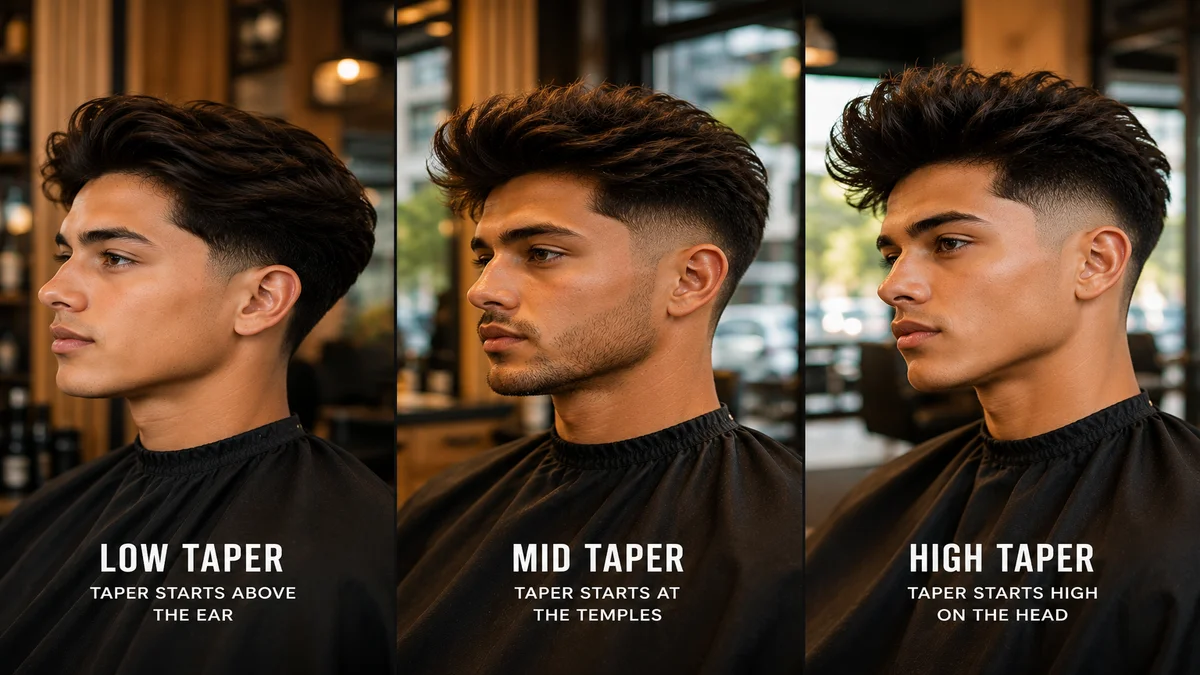
The blowout taper is not one haircut — it's a family. Every version shares the same foundation: long, textured hair on top blown up and back for volume, and a clean taper working around the edges. What changes is where the taper starts, which hair types it suits, and how much maintenance it demands. This page is your starting point. Browse every style below, read what makes each one different, and find the one that fits your hair, your face, and your schedule.
Not sure which direction to go? The full anatomy breakdown is worth reading first if you're new to the cut. If you already know the basics, pick a card below and go deep.
Blowout Taper Styles by Height
Taper height is the single biggest variable in this cut. It determines how much contrast you get, how often you need a cleanup, and which face shapes and workplaces it suits. Three heights cover the full range:
Low Blowout Taper
Taper starts just above the ear. Minimum contrast, grows out cleanest, suits every face shape and workplace.
Read the guide → Most PopularMid Blowout Taper
Taper starts at the temple. Balanced contrast, the default choice for most guys, works on almost every hair type.
Read the guide → BoldHigh Blowout Taper
Taper starts at the upper temple. Maximum contrast, the viral-photo look, needs a cleanup every 10 days.
Read the guide →Which height is right for you
| Height | Taper Starts | Regrowth Shows | Best For |
|---|---|---|---|
| Low | Above the ear | ~3 weeks | First-timers, conservative workplaces, fine hair |
| Mid | Temple level | ~2 weeks | Almost everyone — the safest bold choice |
| High | Upper temple | ~10 days | Frequent shop visitors, thick hair, style-forward settings |
Blowout Taper Styles by Hair Type
Height is not the only variable. The texture and natural pattern of your hair changes how the blowout behaves on top — how much volume it holds, how long the style lasts, and which product routine works best. Each of these pages is written specifically for that texture:
Blowout Taper — Curly Hair
Coily and curly patterns hold volume better than any texture. The technique, products, and length considerations are different.
Read the guide → Hair TypeBlowout Taper — Wavy Hair
Wavy hair gives natural movement and texture. The right approach turns that into effortless shape rather than frizz.
Read the guide → Hair TypeBlowout Taper — Straight Hair
Straight hair needs more product support to hold lift. The right blow-dry technique and clay choice makes all the difference.
Read the guide →Blowout Taper Style Variations
Beyond height and hair type, there are combination styles that add a second design element to the blowout taper. These pages cover the most popular pairings:
Not Sure Which Blowout Taper Style to Pick
Three questions narrow it down fast:
- How often can you realistically get a haircut? Every 10 days = high is fine. Every 3–4 weeks = low only.
- What's your workplace dress code? Strict = low or mid. Creative or casual = any height works.
- What does your hair do naturally? Thick and dense = any height. Fine or thinning = low keeps attention on the volume, not the density.
Still undecided? The Find Your Cut Quiz walks through your face shape, hair type, and lifestyle and gives a specific recommendation. Or read How to Ask for a Blowout Taper so you're ready the moment you sit in the chair.
Blowout Taper Styles FAQs
What are the main blowout taper styles?
The three core heights are low (above the ear), mid (temple level), and high (upper temple). On top of that you have hair-type variations — curly, wavy, straight — and combination styles like the textured fringe. Every variation keeps the same blown-out volume on top; what changes is where the taper sits and what the hair texture adds.
Which blowout taper style is easiest to maintain?
The low blowout taper. The gradient stays in a narrow band just above the ear, grow-out is gradual, and you can stretch to four weeks between cuts without the cut looking unintentional. The high version is the hardest to maintain — regrowth shows in 10 days.
Can any hair type get a blowout taper?
Yes. Straight, wavy, and curly hair all work — the technique and products differ per texture, but the structure of the cut (long top, tapered edges) suits every type. Coily hair actually holds the blowout volume best of all because curl pattern creates natural lift.
How is a blowout taper different from a blowout fade?
A taper keeps the work in a narrow band around the hairline edges. A fade covers the entire side of the head in a gradient down to skin. The taper is subtler, grows out more gracefully, and leaves more hair on the sides — which is why most blowout styles use a taper rather than a fade.
Go Deeper
Pick a style or learn the full technique: