Blowout Taper Wavy Hair: Turning Natural Movement Into the Style
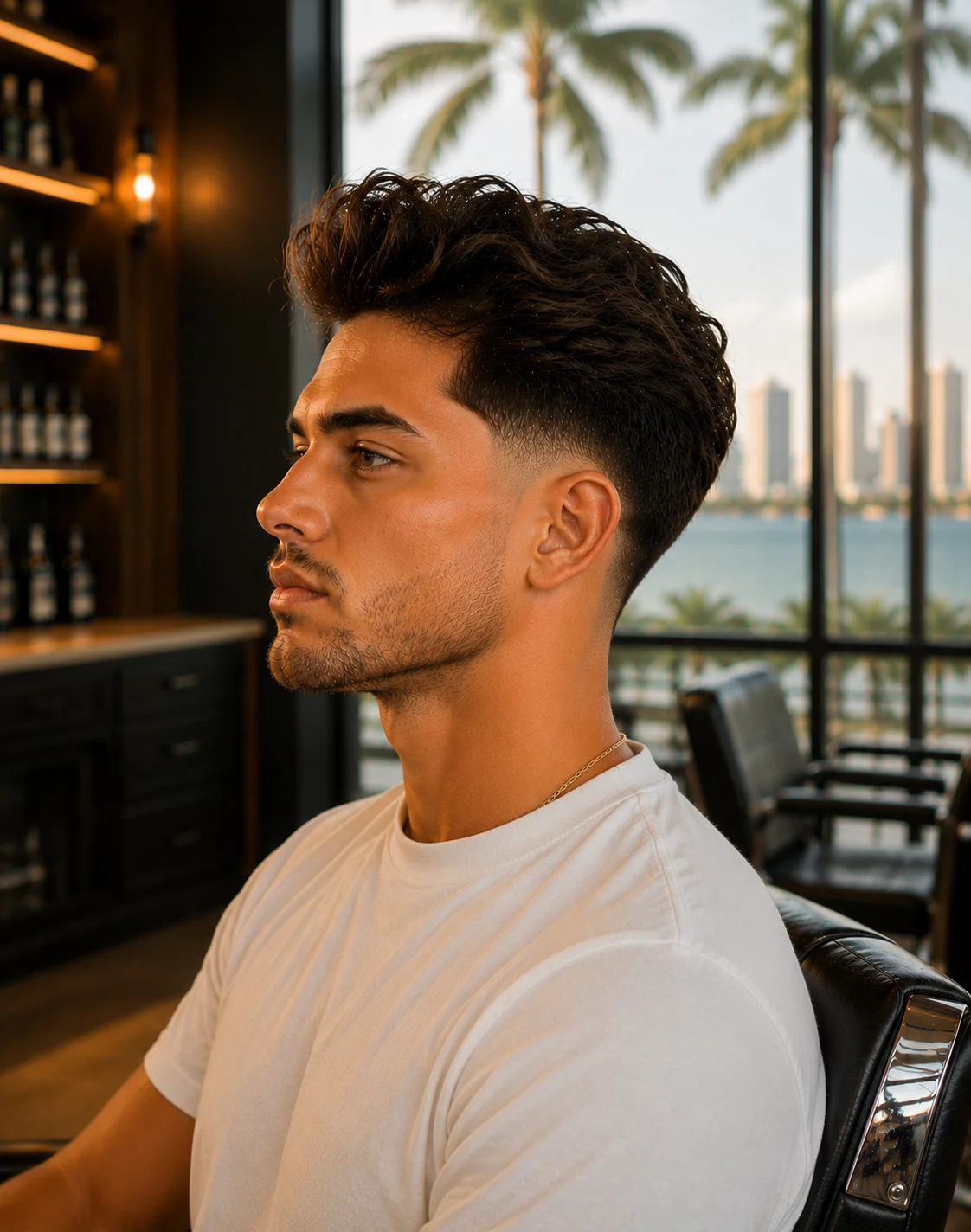
A blowout taper on wavy hair produces what I'd call the most effortless-looking version of this cut. Wavy hair sits between straight and curly — it has enough natural body to hold volume without heavy product, and enough movement to look like the style happened naturally rather than being constructed. The result is a blown-out shape that reads casual and lived-in on top, clean and sharp on the sides — a combination that photographs well and translates to real life even better.
The blowout taper wavy hair combination is genuinely low-effort once you understand what wavy hair wants. The main job is enhancing the natural S-pattern rather than fighting it — which means lighter products, less heat, and a technique that works with the wave instead of straightening it out.
Why Wavy Hair Is Ideal for a Blowout Taper
Wavy hair has two structural advantages that make the blowout taper easier to achieve and maintain than on straight hair:
- Natural body. The S-shaped wave pattern gives each hair strand a built-in bend that creates volume and movement. Unlike straight hair, wavy hair resists lying flat — the wave keeps pushing upward, which means the blown-out shape holds longer with less product.
- Built-in texture. The wave creates visual texture at the surface that makes the top look full and dimensional without any additional product work. Straight hair needs clay or paste to create this effect; wavy hair produces it automatically.
The one challenge wavy hair presents is frizz — particularly in humidity. The blow-dry technique matters here not just for shape but for smoothness. The right approach enhances the wave pattern and keeps the surface smooth rather than puffing it outward.
Which taper height suits wavy hair best
| Height | How It Looks on Wavy Hair | Best For |
|---|---|---|
| Low | Subtle — the wave movement dominates, taper is barely visible | Conservative settings, maximum grow-out |
| Mid | Balanced — the most popular wavy hair blowout combination | Most face shapes, everyday wear |
| High | Bold — wavy volume on top looks even bigger against high skin taper | Thick wavy hair, style-forward settings |
Styling a Blowout Taper on Wavy Hair
The wavy hair routine is lighter and simpler than the straight hair version — the wave does the structural work, so you're enhancing rather than constructing:
- Towel dry to damp. Same starting point as every texture — squeeze out excess water, don't rub. Rubbing disrupts the wave pattern and creates frizz before you even start.
- Sea salt spray on damp hair. This is the key product for wavy hair blowout tapers. Salt spray enhances the natural wave texture, adds grip without weight, and gives the blow-dried result a natural, effortless finish. Apply evenly through roots and mid-lengths.
- Blow-dry upward with a vent brush, medium heat. Use the concentrator nozzle and direct airflow from roots to ends. Lift sections upward and back with the vent brush — you're amplifying the wave's natural lift direction rather than fighting it. Keep heat at medium; high heat damages the wave pattern over time.
- Cool air finish. Same as every texture — 20 to 30 seconds of cool air locks the shape. On wavy hair this also sets the wave pattern so the surface stays smooth rather than frizzing as it cools.
- Light matte paste or nothing. Wavy hair often needs no finishing product at all — the salt spray and blow-dry are enough. If you want more definition, work a small amount of matte paste through the surface with fingertips. Skip clay or heavy products that flatten the wave.
Managing frizz on wavy hair
Frizz on a blowout taper wavy hair result usually comes from one of three places: too much heat, rubbing with the towel, or skipping the cool-air finish. Fix those three and frizz becomes a non-issue for most wavy hair types. In high humidity, a light anti-humidity spray on dry hair after styling adds a barrier that keeps the surface smooth through the day.
Blowout Taper Wavy Hair FAQs
Is wavy hair good for a blowout taper?
Wavy hair is one of the best textures for this cut. The natural S-pattern gives built-in body and volume that holds the blown-out shape longer than straight hair and with less product. The styling routine is simpler, and the result looks effortlessly natural rather than constructed.
Should I use mousse or salt spray for a blowout taper on wavy hair?
Salt spray is the better choice for wavy hair. It enhances the natural wave texture and adds grip without weight, which keeps the blown-out shape looking natural. Mousse works too — it gives more structure and hold, which is useful on finer wavy hair that needs more support. Try salt spray first; add mousse underneath if the volume drops too fast.
How do I stop my wavy blowout taper from going frizzy?
Three main fixes: stop towel-rubbing (squeeze and blot instead), use medium rather than high heat on the dryer, and never skip the cool-air finish. All three reduce frizz significantly. In humid conditions, a light anti-humidity spray on dry hair after styling adds extra protection.
Can I get a blowout taper on wavy hair without a diffuser?
Yes — a standard vent brush with the concentrator nozzle is better for this cut than a diffuser. A diffuser is designed to preserve tight curl patterns; a blowout taper needs directional lift upward and back, which you get from a vent brush. Use the diffuser only if you want to enhance and preserve the wave rather than blow it out into a fuller shape.
Explore by Hair Type
See how the blowout taper works on other textures: