How to Do a Blowout Taper: Step-by-Step Barber Technique
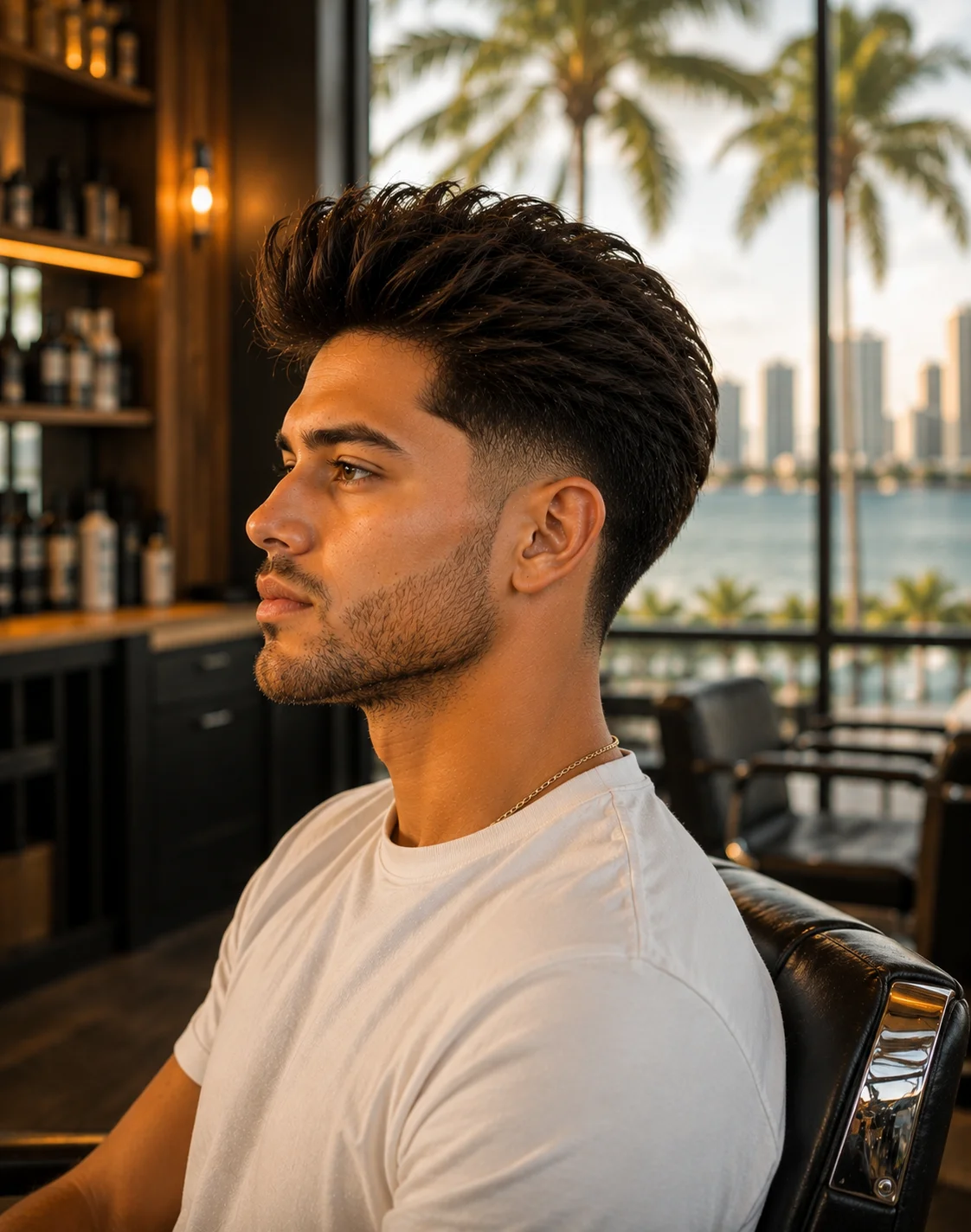
Learning how to do a blowout taper at home is mostly about the blow-dry — the taper itself is handled by your barber every two to three weeks, but the volume on top lives or dies by what you do in the bathroom every morning. Get the technique right and the cut looks exactly like the chair. Get it wrong and you've got a flat, heavy style that looks nothing like what you asked for.
This guide covers the full at-home styling routine plus the in-chair technique your barber uses, so you know what to expect from both sides. Whether you're maintaining a low, mid, or high blowout taper, the styling steps are identical — the taper height changes nothing about how you blow-dry the top.
What You Need Before You Start
You don't need a professional kit, but three tools make a real difference:
| Tool / Product | What to Get | Why It Matters |
|---|---|---|
| Hair dryer | 1,800W+ with a concentrator nozzle | Concentrates airflow for directional volume |
| Vent brush | Medium paddle or round vent brush | Lifts the roots as you dry |
| Volumizing mousse or salt spray | Applied to damp hair | Gives lift structure that holds all day |
| Matte clay or paste | Medium hold, low shine | Defines texture without collapsing volume |
Avoid heavy pomades, waxes, or anything labelled "high shine" — they weigh the hair down and collapse the lift the blow-dry creates. If your hair is fine, a light powder volumizer on dry hair after styling adds an extra layer of grip.
How to Do a Blowout Taper: The 5-Step Routine
Follow these steps every time you style and the blowout taper holds its shape consistently:
- Start with towel-dried, damp hair
Not soaking wet, not fully dry. Squeeze out excess water with a towel — rough dry for about 30 seconds. Damp hair is the best canvas for heat styling because it's still shapeable but not so wet that the dryer has to work through standing water.
- Apply volumizing product to the roots
Work a golf-ball amount of mousse or a few pumps of sea salt spray through the roots and mid-lengths. Distribute evenly with your fingers — don't comb it in. The roots are where volume is built; coating the ends first is the most common mistake.
- Blow-dry upward and back with a vent brush
Point the concentrator nozzle downward (from roots to ends — always, to smooth the cuticle). Use the vent brush to lift sections upward and slightly back as you dry. Work in sections from the sides toward the crown. Medium heat, medium speed. High heat on damp hair raises frizz.
- Lock the shape with cool air
Once the hair is fully dry and the volume is set, switch the dryer to cool air and blast for 20 to 30 seconds. Cool air closes the hair cuticle and freezes the shape in place. This single step doubles how long the style holds.
- Finish with matte clay or paste
Warm a pea-sized amount between your palms until it's almost invisible, then work it through the hair with your fingertips — not a comb. Focus on the surface and the front for texture and definition. Less is more; you can always add but can't take away.
How to do a blowout taper by hair type
The five steps above apply to every texture, but the product choice shifts slightly depending on your hair:
- Straight hair: needs the most product support. Use mousse on damp hair plus a light powder on dry hair after. Without support, straight hair falls flat by midday.
- Wavy hair: sea salt spray is your best friend — it enhances the natural wave pattern and gives grip without weight. Skip the mousse if your waves are strong.
- Curly or coily hair: the blow-dry needs a stretch — use a Denman brush or fingers to elongate the curl as you dry, working upward. Product-wise, a curl cream on damp hair before the mousse keeps frizz controlled.
The In-Chair Technique: What Your Barber Does
Understanding the barber's side helps you communicate better and know what a quality cut looks like. Here is how a blowout taper is executed in the chair:
- The consultation: your barber should confirm height (low, mid, or high), guard numbers for the taper, top length in inches, and whether you want a lineup or natural edge. If they don't ask, you tell them — check our full guide on how to ask for a blowout taper.
- Cutting the top: scissors over comb or point-cutting technique to add texture and remove bulk. A good barber cuts the top with movement in mind, not just length.
- The taper: clipper work starting at the chosen height, graduating the guard numbers down toward the skin or the lowest guard at the edges. The blend is everything — a visible line between lengths is a mistake, not a style.
- The finish blow-dry: most barbers will blow-dry the top at the end to show you the final shape. This is also your chance to ask for adjustments before you leave the chair.
How to Do a Blowout Taper FAQs
How long does it take to style a blowout taper at home?
Five to ten minutes once you have the routine down. The blow-dry itself takes three to five minutes; the product application and finish add another two. If it's taking longer, you're likely working with hair that's too wet — towel dry more aggressively before you start.
Can I do a blowout taper without a vent brush?
You can, but the result won't be as good. A vent brush lifts the roots as you dry, which is how the volume gets built. Without it you're just drying the hair flat. A round brush is a decent substitute; your fingers work in a pinch but give less lift and direction.
Why does my blowout taper go flat by midday?
Three likely causes: hair was too wet when you started styling, you skipped the cool-air finish step, or your finishing product is too heavy. Fix all three and the volume holds. If you have fine hair, add a volumizing powder on dry hair after styling for extra grip.
How often should I wash my hair if I have a blowout taper?
Every two to three days is the sweet spot for most hair types. Daily washing strips the natural oils that give hair grip and body, which makes the blowout harder to hold. On non-wash days, a dry shampoo at the roots refreshes volume without resetting the whole style.
Up Next
Know the technique — now pick your style or learn what to say in the chair: