Blowout Taper Fade: More Contrast, Same Volume
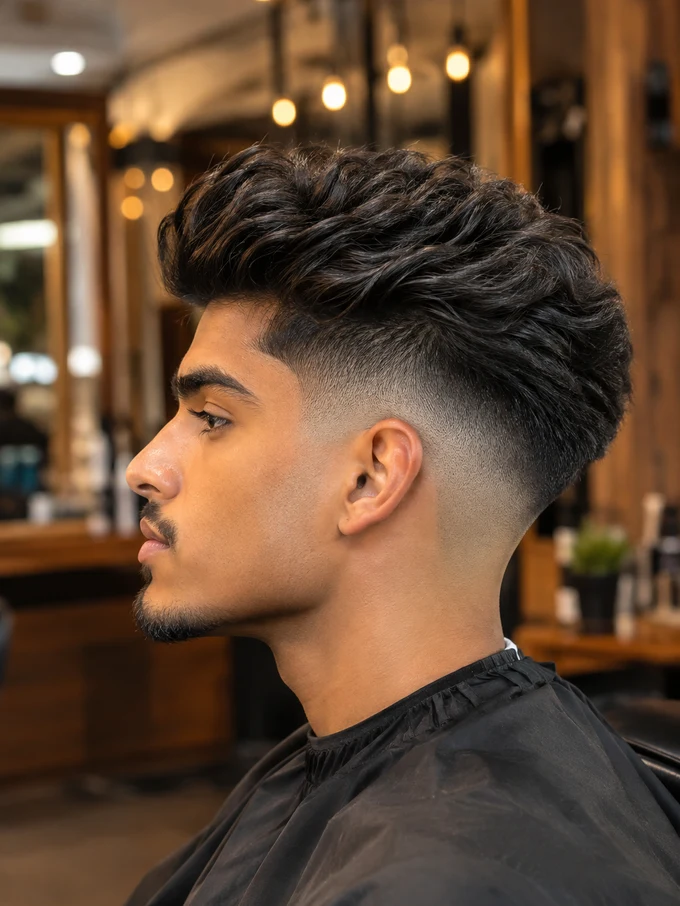
A blowout taper fade takes the blowout taper's blown-out top and pairs it with a skin fade on the sides, wider than the narrow band a pure taper uses. The result is higher contrast and a shorter grow-out window, 10 to 14 days instead of 2 to 4 weeks, which is the main thing to weigh before choosing between the two.
I get asked constantly whether "fade" and "taper" are just two names for the same thing. They are not, and I can usually tell which one a client wants once they describe how much skin they want to see. A blowout taper fade takes the blowout taper concept and pushes the sides further, replacing the subtle taper gradient with a true skin fade. The blown-out volume on top stays identical. What changes is the contrast: instead of a gradual blend confined to a narrow strip around the hairline, a fade takes the sides down to skin, creating a sharper frame for the volume above.
This version also brings clients back soonest for an edge cleanup, which is the one thing most photos of this cut do not show you.
Blowout Taper vs Blowout Taper Fade: What's the Exact Difference?
Short version: a taper stays soft at the edges, a fade goes to skin somewhere on the side. The heights below show how far up it goes.
| Feature | Blowout Taper | Blowout Taper Fade |
|---|---|---|
| Side coverage | Narrow band at hairline edges only | Skin fade starting above the ear (low) up to near the part (high) |
| Contrast | Soft, gradual blend | Sharp, high-contrast line against the top |
| Maintenance | Every 2–4 weeks | Every 10–14 days |
| Best for | Fine or thinning hair, irregular schedules | Thick hair, frequent shop visitors |
Simple test: if skin stays below the ear, it's a taper. If it climbs above the ear, it's a fade. For the full side-by-side, see Blowout Taper vs Taper Fade.
Low, mid, and high blowout taper fade variations
Just like the blowout taper, the fade version comes in different heights:
- Low blowout taper fade: fade starts above the ear, goes to skin at the base. Covers less of the side than mid or high, so it stays the most manageable version to grow out.
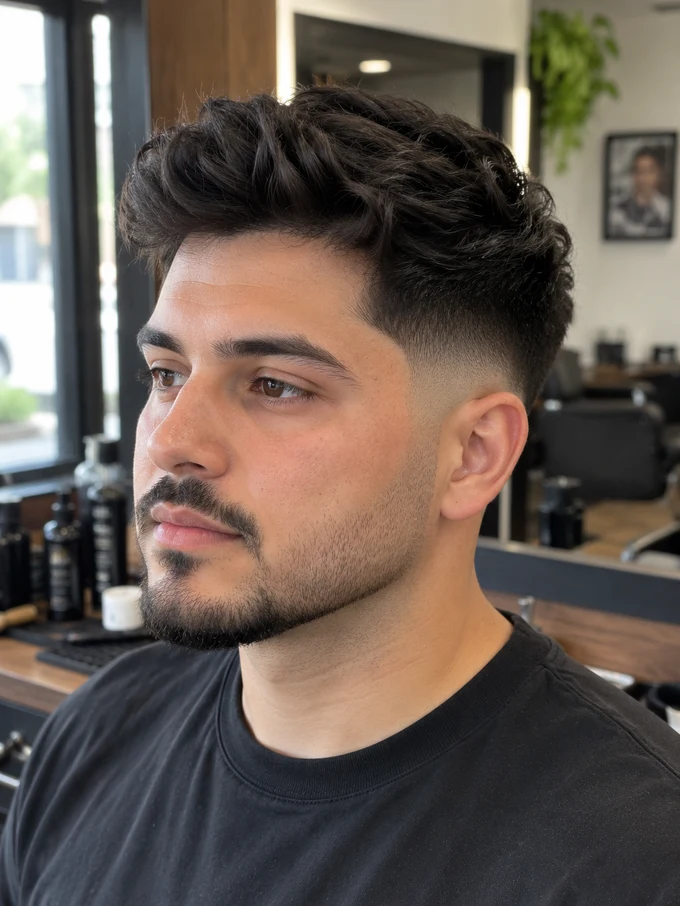
- Mid blowout taper fade: fade starts at the temple and covers most of the side down to skin. The most popular fade variation, strong contrast that works on most face shapes.
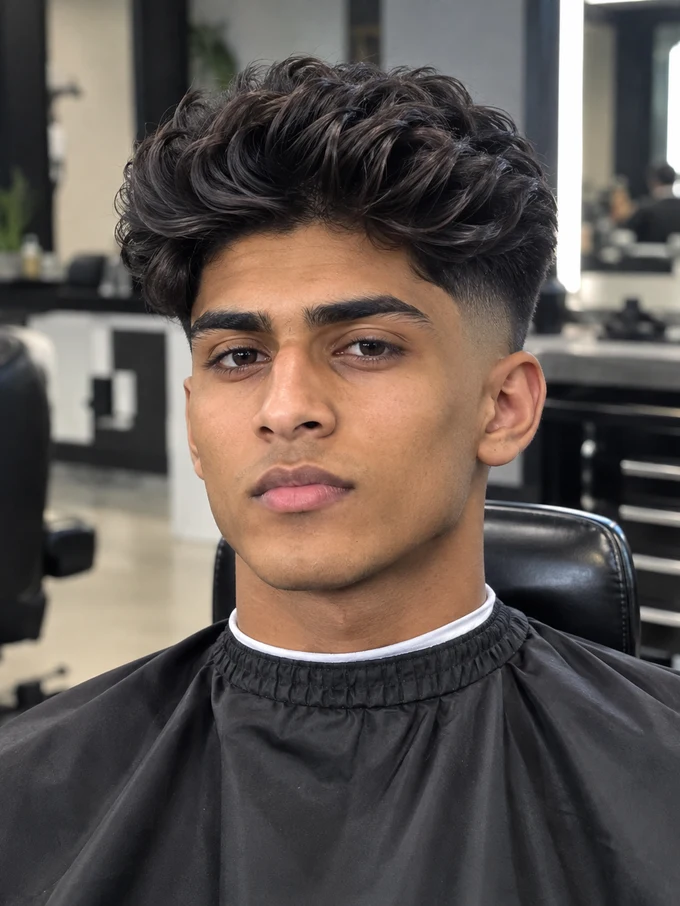
- High blowout taper fade: fade starts near the part line, the most side coverage of the three. Maximum contrast, maximum maintenance.
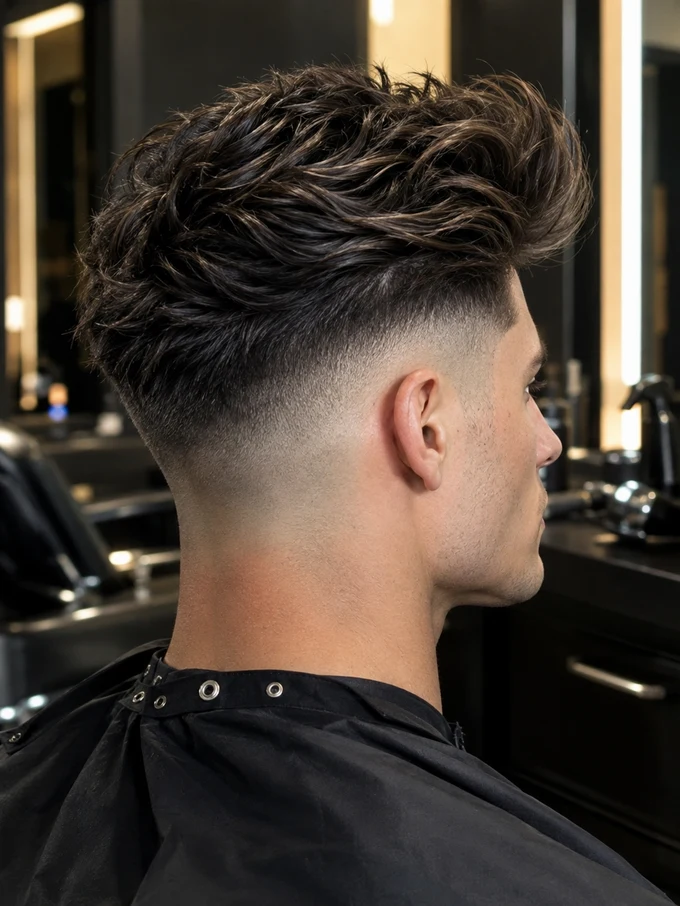
Who Should Get a Blowout Taper Fade?
A lot of guys who ask for this end up in the pure taper instead, once we talk through their schedule. Here's who the fade suits:
- Thick, dense hair. The fade removes significant weight from the sides. Thick hair fills the dramatic silhouette up top and makes the contrast look intentional rather than exposing density differences.
- Frequent shop visitors. Skin edges show regrowth within 10 days. If a standing fortnightly appointment sounds reasonable, this cut will always look sharp. If your visits are irregular, the pure blowout taper is the smarter choice.
- Style-forward or casual environments. The blowout taper fade reads as a bold style statement, a good call in creative industries, student life, and nightlife. Conservative offices are a different matter, see the note below.
- Oval and longer face shapes. The bare sides and vertical volume elongate and frame the face. Round faces can work with a blowout taper fade but should avoid the highest versions, which add apparent width at the ear level.
When I'd tell you to get the pure blowout taper instead
If your workplace has a conservative dress code, your maintenance schedule is irregular, your hair is fine or thinning, or you are getting this style for the first time, the blowout taper is the better starting point. Growing back what a fade takes off takes weeks, and most people underestimate that the first time, so plan on rebooking before the fade line starts to fuzz out.
Blowout taper fade on straight hair vs afro and curly hair
Straight hair shows the fade line most clearly since there is no natural texture to soften the transition. I tell straight-haired clients to expect a daily styling routine, not a wash-and-go, or the volume collapses against the sharp sides by midday.
An afro taper fade works the opposite way for the top. The coil pattern does most of the visual work against the skin fade, so styling effort is lower than on straight hair, but tighter coils make new growth show up fast against a clean fade line, so edge visits matter more, not less, for coily hair. Looser, wavy-curl textures are more forgiving here since the curl itself blurs the regrowth line for a few extra days.
Why Does a Blowout Taper Fade Look Flat or Messy?
Almost always one of three things: not enough length on top, the wrong product for the hair type, or edges that have grown out past their window. Here's how I sort it out in the chair.
| Problem | Likely Cause | Fix |
|---|---|---|
| Top has no lift by afternoon | Top length under four inches, or product too heavy for the hair type | Ask for four to five inches on top, switch to a lighter matte product |
| Fade line already fuzzy at day 7 | Fine or fast-growing hair, or the fade was cut too high for a 2-week schedule | Book edge cleanups at day 7 to 10, or drop to a lower fade height |
| Sides look patchy, not blended | Guard change was too abrupt between skin and the taper above it | Ask for a blended transition, not a stacked one, next visit |
How Do You Ask for a Blowout Taper Fade?
The exact words: "Mid blowout taper fade, fade the sides to skin, start it at the temple, keep the top long with texture so I can blow it out." Adjust low or high depending on your preference. Then add:
- Top length: "Keep at least four inches on top." A short top on a high fade destroys the blowout proportion.
- Fade height: low (above ear), mid (temple), or high (near part line). Name it explicitly, barbers interpret "fade" differently.
- Lineup: "Sharp edge-up on the hairline" or "natural edge." A lined hairline amplifies the sharp look but shows grow-out even faster than the fade itself.
- Show a photo. There are enough variations on this cut, low, mid, high, straight, curly, that a reference photo saves real back-and-forth on what "fade" means at your shop.
For the full consultation guide with scripts for every height, read How to Ask for a Blowout Taper. If you want more contrast than a mid fade gives, ask about the high blowout taper fade, since "high" means different things at different shops.
Blowout Taper Fade FAQs
Is a blowout taper fade the same as a blowout taper?
No, they are related but distinct. A blowout taper keeps the clipper work in a narrow band around the hairline edges, leaving most of the side at length. A blowout taper fade takes the side down to skin somewhere along the way, how far up depends on whether you go low, mid, or high. Both have the same blown-out volume on top; the fade version has more contrast and needs more frequent maintenance.
How often does a blowout taper fade need a cleanup?
Every 10 to 14 days for the skin edges to stay sharp. The skin line is the most visible part of the cut and fills in faster than any other section. A five-minute edge cleanup between full cuts extends the sharp window, but skipping visits for three weeks will visibly age the fade.
Does a blowout taper fade work on curly hair?
Yes, and it looks particularly striking on curly hair. The natural curl texture on top creates volume against the skin-faded sides, and looser curls soften the regrowth line for a few extra days compared to straight hair. Tighter coil patterns show new growth faster against the fade, so ask your barber to cut the top dry to account for shrinkage and plan edge visits a little sooner.
What is the difference between a blowout taper fade and a skin fade?
A skin fade describes any fade that graduates to bare skin. It can be low, mid, or high, and can be paired with any top style. A blowout taper fade is specifically a skin fade paired with a blown-out, volumized top. The top style is what makes it a blowout taper fade rather than just a skin fade.
How do you do a blowout taper fade?
The barber fades the sides to skin first, working from the guard length at the temple down to bare skin at the neckline, then leaves the top at four to five inches. After the cut, the top gets blow-dried upward with a round brush and finished with a light matte product, which is what creates the volume against the faded sides. Skipping the blow-dry step is the most common reason this cut looks flat when people try to recreate it at home.
Is a blowout taper fade the same as a low taper fade blowout?
They usually describe the same cut, just in a different word order. Some barbers use "blowout taper fade" and others say "low taper fade blowout" depending on which word they lead with, the height or the fade. Bring a photo either way, since the height (low, mid, high) matters more to the result than which term you use.
Compare and Explore
See how the fade version stacks up against the pure taper:
TheBlowoutTaper.com is an independent style guide and is not affiliated with, endorsed by, or sponsored by any barbershop chain or product brand mentioned on this site. Cut names and heights vary by shop, bring a photo to confirm what your barber means before they start clipping. This page is for general style reference, not a substitute for an in-person consultation.