Blowout Taper Haircut: Everything You Need to Know Before You Sit Down
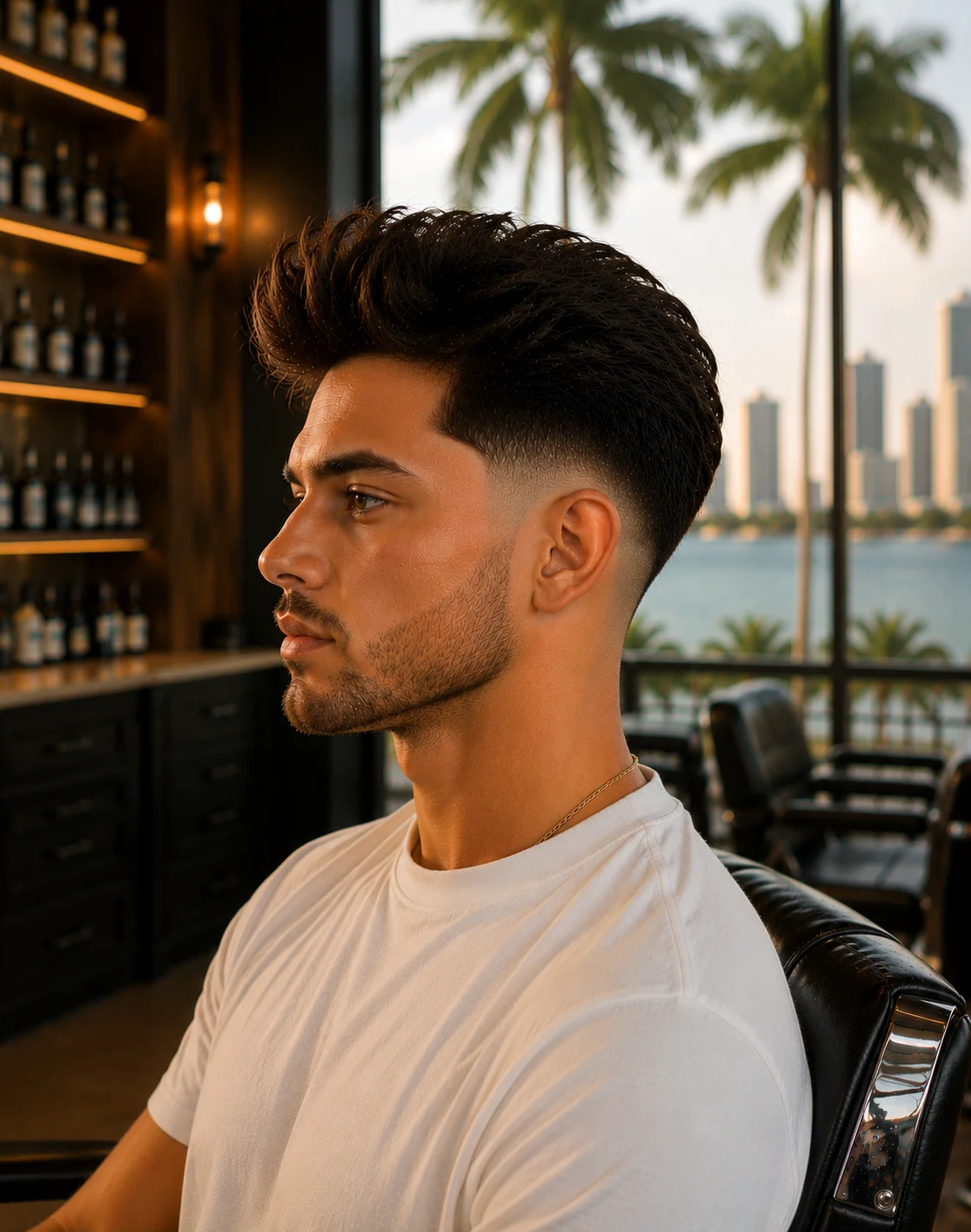
The blowout taper haircut is one of the most searched men's styles right now, and also one of the most misunderstood. Guys walk into the chair and ask for it by name without being able to describe what it actually is — which means they rely entirely on the barber's interpretation and often walk out with something different from what they pictured. This page is the complete guide: what the blowout taper haircut is, how it works, every variation available, who it suits, and exactly what to say to get the result you want.
The blowout taper haircut has two components and both matter equally. Get one wrong and the whole cut suffers. Understanding both before your appointment is the single most useful thing you can do to guarantee a good result.
What Is the Blowout Taper Haircut
The blowout taper haircut is built from two distinct elements that work together as a single composition:
- The blowout: the top section of hair — typically three to five inches — cut with texture and blow-dried upward and back to create volume and lift. The shape is what makes this a blowout rather than a regular cut. Without the blow-dry, it reads as a textured medium-length haircut. With it, the volume becomes the dominant feature of the style.
- The taper: a gradual reduction in hair length around the hairline edges — above the ears, through the sideburn area, and along the neckline. The taper is not a fade. A fade covers the entire side of the head; a taper stays in a narrow band around the perimeter. This distinction matters for how the cut grows out and how often you need a cleanup.
Together, the blowout on top and the taper on the sides create a cut with strong vertical volume, clean edges, and a polished finish that works across dress codes and face shapes. For the full anatomy breakdown, read What Is a Blowout Taper.
The three height variations
| Height | Taper Starts | Maintenance | Best For |
|---|---|---|---|
| Low | Above the ear | Every 3–4 weeks | First-timers, fine hair, conservative workplaces |
| Mid | Temple level | Every 2–3 weeks | Almost everyone — the most versatile option |
| High | Upper temple | Every 10–14 days | Thick hair, frequent visits, bold environments |
Who the Blowout Taper Haircut Suits
The blowout taper haircut suits a wider range of people than almost any other men's style. The key variables are hair type, face shape, and lifestyle:
By hair type
- Straight hair: produces the cleanest, most polished version of the cut. Needs more product support to hold the blowout volume through the day. Read the straight hair guide for the full product routine.
- Wavy hair: the most effortless result. Natural wave movement adds body and texture to the blowout shape with minimal product. Read the wavy hair guide.
- Curly and coily hair: holds the blown-out volume best of all textures. The cut looks striking on curly hair and the natural texture makes grow-out more forgiving. Read the curly hair guide.
By face shape
The blowout taper haircut flatters almost all face shapes because the volume on top creates vertical elongation and the taper creates side definition. Round faces benefit most from the elongating effect of the volume. Square faces get their strong jawline complemented by the soft, full top. Oval faces work with any height. Long faces should avoid the highest taper heights, which add too much vertical emphasis to an already long shape.
By lifestyle
The blowout taper haircut suits every lifestyle — the height variable is what you adjust based on how much maintenance you can commit to and what your workplace allows. Use the Find Your Cut Quiz if you are not sure which height matches your situation.
How Much Does a Blowout Taper Haircut Cost
The blowout taper haircut costs between $30 and $80 at most barbershops in the United States, depending on location, the barber's experience level, and whether the shop charges separately for the blow-dry finish. Breakdown by tier:
- Budget barbershops ($25–$40): standard cut, may not include a blow-dry finish. You will need to style it at home.
- Mid-range barbershops ($40–$60): the most common price range for a quality blowout taper with a proper blow-dry finish included.
- Premium or specialty barbershops ($60–$90+): upscale shops in major cities, barbers with significant followings or specialist skills.
Tip is standard at 15 to 20 percent on top of the cut price. If your barber also handles the beard, that is usually an additional $10 to $20 depending on length and complexity. Maintenance visits — just a neckline and edge cleanup rather than a full cut — typically run $15 to $25 and extend the sharp window between full appointments considerably.
Blowout Taper Haircut FAQs
How long does a blowout taper haircut take at the barbershop?
A full blowout taper haircut with a blow-dry finish typically takes 30 to 45 minutes at a good barbershop. Budget 45 minutes for your first visit at a new shop. Maintenance visits — neckline and edges only — take 10 to 15 minutes.
How long does the hair on top need to be for a blowout taper?
Three inches is the practical minimum for real blowout volume on straight hair. Four to five inches gives the best flow and shape. Curly and wavy hair can work at slightly shorter lengths because the natural texture adds volume the blow-dry enhances. Below two inches on any texture, the cut reads as a textured crop rather than a blowout taper.
How do I find a good barber for a blowout taper haircut?
Search Instagram or Google for barbershops in your area and look specifically for photos of blowout tapers in their portfolio — not just fades or standard cuts. A barber who regularly executes this style will have multiple examples with different hair types. Book a consultation before committing to a full appointment if you are unsure.
Can I get a blowout taper haircut if my hair is thin or fine?
Yes — with the right height. A low taper on fine hair keeps attention on the volume the blow-dry creates up top rather than exposing the sides where density differences show. Avoid the high taper, which reveals the bare skin alongside hair that may not look as dense as thicker hair does at the same height.
Go Deeper
Read the guide for your height or take the quiz: