Blowout Taper vs Low Taper Fade: Which Low Cut Is Right for You
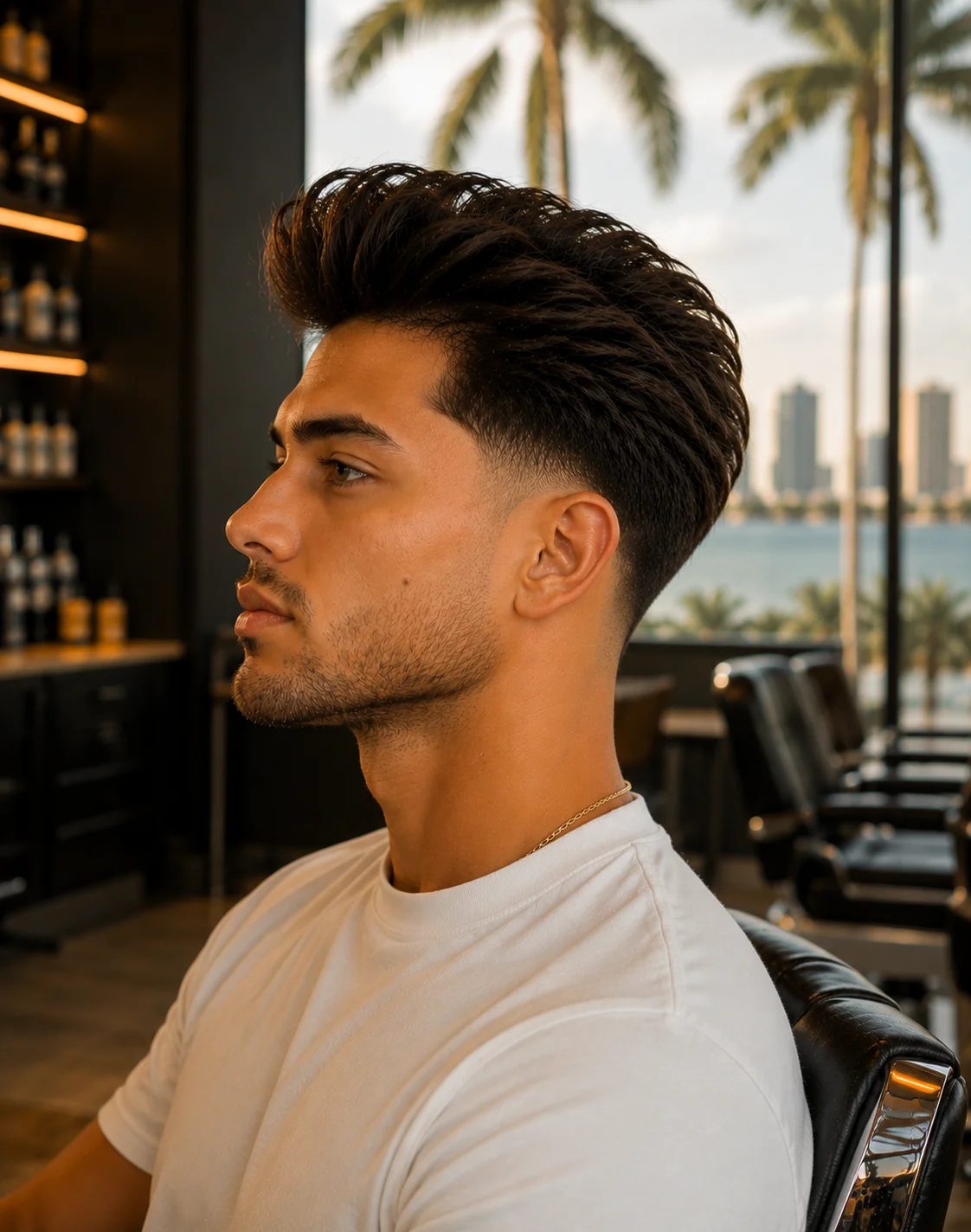
The blowout taper vs low taper fade comparison is the trickiest of all the side-by-side questions because both cuts start at the same height — just above the ear. From the front, a fresh version of each can look nearly identical. The difference only becomes clear when you look at the side of the head, and it becomes very clear by week three when one is still sharp and the other has a visible shadow line.
Both are excellent cuts. The blowout taper vs low taper fade decision is really a maintenance and contrast decision — and once you understand exactly what each one does to the sides, the right choice for your lifestyle becomes obvious.
Blowout Taper vs Low Taper Fade: The Key Differences
Both cuts start at the same height but take the sides in completely different directions:
| Feature | Blowout Taper | Low Taper Fade |
|---|---|---|
| Starting height | Just above the ear | Just above the ear |
| Coverage area | Narrow band around hairline only | Full side panel from ear down to skin |
| Side hair length | Most of the side stays at length | Most of the side is taken very short |
| Skin exposure | Minimal — #1 or #2 at base | Goes to skin at the neckline and sideburn |
| Contrast level | Subtle | Moderate to high |
| Maintenance | Every 3–4 weeks | Every 2–3 weeks |
| Grow-out | Very gradual, stays clean longest | Skin line shows within 2 weeks |
| Best for | Infrequent visitors, fine hair, any workplace | More contrast without a high fade commitment |
Where the work actually happens
On a blowout taper, the clipper work stays in a band roughly two fingers wide along the sideburn, above the ear, and along the neckline. The side of the head between the ear and the part line stays at its natural length — you'd never know it was tapered from a straight-on view.
On a low taper fade, that same starting height (just above the ear) is where the gradient begins — but instead of staying in a narrow strip, the barber blends the clipper work all the way down the side panel to skin at the base. The entire lower half of the side gets taken down. That's what creates the visible skin line at the neckline and sideburn area that makes the low taper fade look sharper and more defined than a pure taper.
Which One Is Right for You
- Choose the blowout taper if you visit the barber every three to four weeks, work in a conservative environment, have fine or thinning hair where skin exposure draws attention to density, or you're new to the cut and want the most forgiving version.
- Choose the low taper fade if you can realistically get a cleanup every two to three weeks, want visible contrast from the front and side without going high, and like the clean-skin look at the neckline and sideburn.
The low taper fade is genuinely the best of both worlds for the right person — more contrast and sharpness than a pure taper, but far less demanding than a mid or high fade. If the low blowout taper felt too subtle for you after a few visits, the low taper fade is the natural next step before jumping to a mid taper.
Fine hair and thinning hair consideration
This is where the blowout taper wins clearly. A low taper fade exposes skin at the neckline and sideburn — on fine or thinning hair, that contrast draws the eye to density differences across the side. The blowout taper keeps more hair on the sides, which means the volume the blow-dry creates on top gets all the attention instead. If density is a concern, stay with the taper.
Blowout Taper vs Low Taper Fade FAQs
What is the main difference between a blowout taper and a low taper fade?
Both start just above the ear, but the blowout taper keeps the clipper work in a narrow band around the hairline edges — most of the side stays at length. The low taper fade takes the full side panel down to skin at the base, creating more contrast and a visible skin line at the neckline and sideburn.
Which cut looks better on round faces — blowout taper or low taper fade?
The low taper fade gives slightly more contrast at the sides, which helps elongate a round face. The blowout taper is also fine for round faces — the volume on top does the elongating work. Either suits a round face; the low taper fade just adds a bit more side contrast to assist.
How much longer does a blowout taper last compared to a low taper fade?
Roughly one extra week. A blowout taper at a low placement can go three to four weeks before looking overgrown. A low taper fade typically needs a cleanup at two to three weeks because the skin line at the neckline and sideburn starts to fill in visibly.
Can I ask for a low taper fade with blowout volume on top?
Yes — that combination works well and is exactly how most barbers execute it. Ask for a low taper fade on the sides and back, keep the top long with texture for a blow-dry. The low fade gives you sharp, defined edges while the blown-out top provides the volume and shape the style is known for.
More Comparisons
See how the blowout taper stacks up against other cuts: