Blowout Taper vs Burst Fade: Two Very Different Shapes
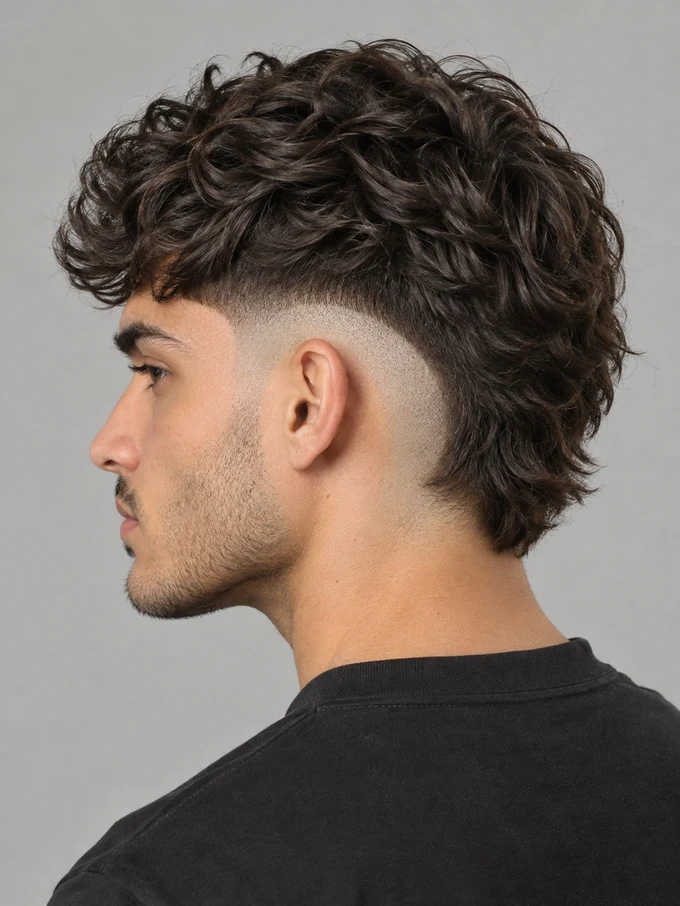
A blowout taper follows a straight line around the hairline. A burst fade cuts a semicircular arc around the ear instead, fading out before it reaches the nape so the back stays at length. It's not just a height difference, it's a different shape entirely, and that shape is what decides which top styles each one suits.
The blowout taper vs taper fade question comes up more often in my chair, but blowout taper vs burst fade comes up too, usually because someone has a mohawk or mullet in mind. A regular fade still works under those styles, technically, but the burst frames them differently: these two cuts don't just differ in how short the sides go, they differ in the actual shape the fade makes on the head. A blowout taper follows a linear path around the hairline. A burst fade creates a semicircular arc that curves around the ear and fades out before the neckline. That shape difference changes which hairstyles each cut suits and how each one grows out.
Both are legitimate cuts with real fan bases. The blowout taper is the more versatile, lower-maintenance choice. The burst fade is a bolder style statement that suits a narrower range of top shapes, but when it fits, it looks unlike anything else.
Which One Works for Your Hairstyle?
Short answer: match the shape to the top. Straight, contained top shapes pair with the taper's straight line. Structured tops with a defined edge pair with the burst fade's arc.
| Top Style | Best Fit |
|---|---|
| Standard blowout, textured fringe, quiff, pompadour | Blowout taper |
| Mohawk, faux hawk, defined center strip | Burst fade |
| Modern mullet, shaggy top | Burst fade |
| Curly or wavy blowout | Either, the burst fade's arc grows out a little more forgivingly on looser curls |
| Coily or afro-textured top | Blowout taper, tight coils show fade regrowth fastest against a clean arc |
Still not sure which fits your top style? Take the Find Your Blowout Taper quiz for a quick recommendation. For more on pairing curl texture with these cuts generally, see blowout taper on curly hair.
Face shape considerations
The blowout taper suits every face shape, the linear taper doesn't impose a strong shape on the sides. The burst fade adds width at the ear level because of the arc, which can work against round faces. If you have a round face and you're drawn to the burst fade look, a lower, tighter arc minimizes the width effect. Oval and longer faces get the most benefit from the burst fade's shape.
How do you ask for a burst fade?
The exact words I'd use: "Burst fade around the ear, keep the arc tight and low, and blend it into my mohawk" (swap in mullet or regular blowout for whatever's on top). A few things worth specifying up front:
- Arc height. A lower arc stays closer to the ear and adds less width, a higher arc is bolder and shows more skin. Round faces should ask for lower.
- Blend point. Tell your barber what's happening on top, mohawk, mullet, or a regular blowout, since the arc gets shaped differently to frame each one.
- Show a photo. "Burst fade" gets interpreted loosely. A reference photo of the arc width and placement saves back-and-forth in the chair.
For the full script on asking for any blowout taper height, see How to Ask for a Blowout Taper.
Blowout Taper vs Burst Fade: Side-by-Side
| Feature | Blowout Taper | Burst Fade |
|---|---|---|
| Shape | Linear, follows the hairline perimeter | Semicircular arc around the ear |
| Coverage | Narrow band at hairline edges | Arcs from temple to behind the ear, fades out before the nape |
| Skin exposure | Minimal | High, goes to skin at the arc |
| Best top styles | Textured fringe, quiff, pompadour | Mohawk, mullet, curly blowout |
| Maintenance | Every 2–4 weeks | Every 10–14 days |
| Grow-out | Gradual and clean | Arc line visible within 10 days |
| Face shapes | All face shapes | Oval, longer faces, adds width to round faces |
The shape difference explained
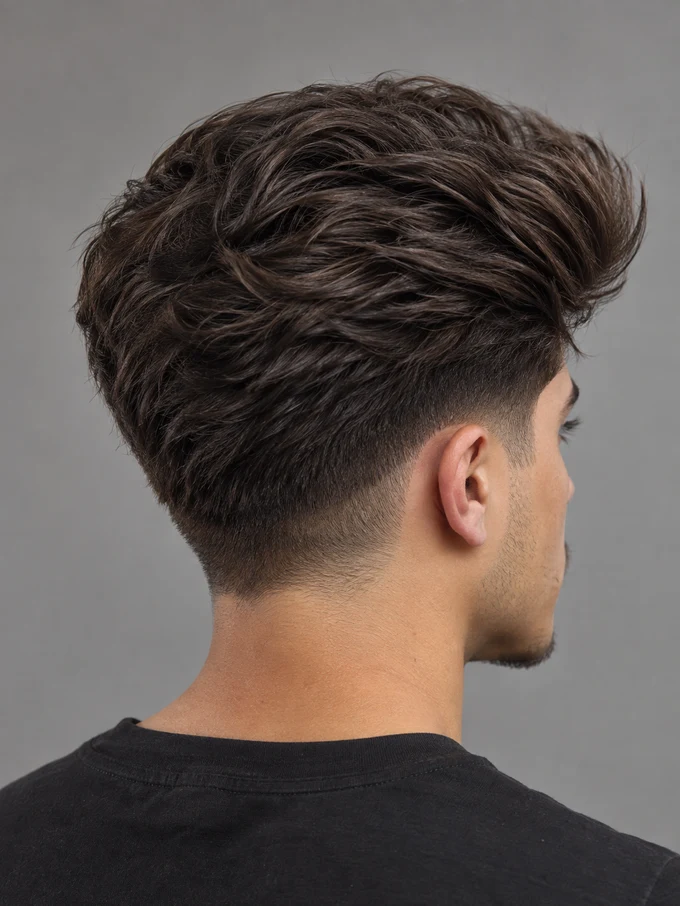
On a blowout taper, I work in a strip that runs parallel to the hairline, above the ear, around the sideburn, along the neckline. The fade line, if there is one, sits horizontally across the side of the head. The shape is clean and directional.
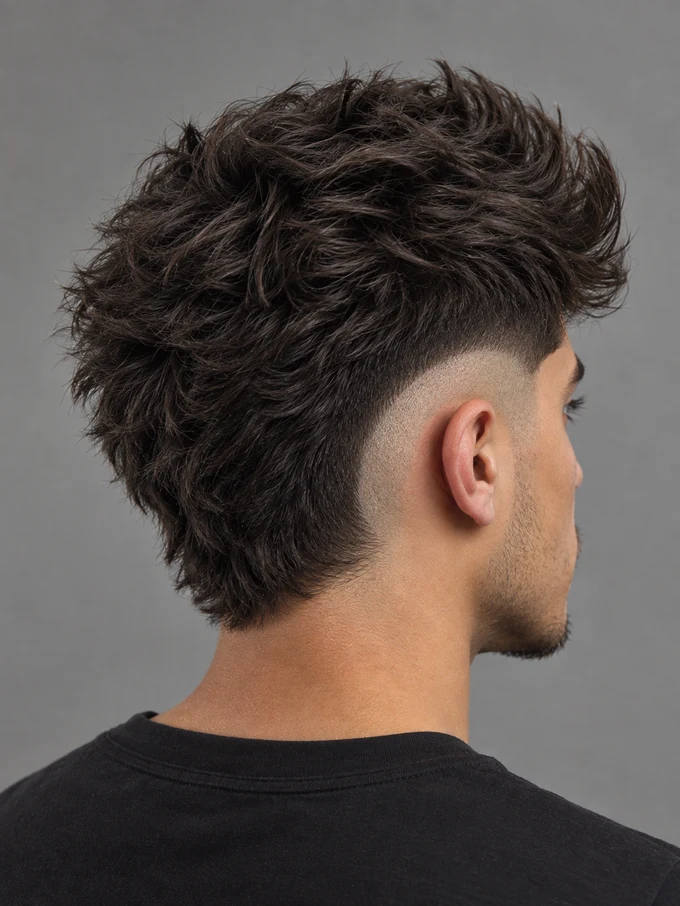
On a burst fade, I create a semicircle centered behind the ear. The shortest point is directly behind the ear and the gradient radiates outward from there, up toward the temple and forward toward the cheek, then fades out before it reaches the nape. The back stays at length instead of being taken down like a regular taper fade, which is exactly why it pairs well with a mohawk or mullet.
Blowout Taper vs Burst Fade FAQs
What makes a burst fade different from a regular taper fade?
The shape and where it stops. A regular taper fade runs the fade all the way down the side to the neckline. A burst fade only arcs around the ear, curving from the temple around to behind the ear, then fading out before it reaches the nape, so the back of the head stays at length. That's what makes it work under a mullet or mohawk, where a full taper fade would take too much length off the back.
Can I get a burst fade with a blowout on top?
Yes, but the pairing works better on some blowout styles than others. A standard, symmetrical blowout looks cleanest with a straight taper line. If your blowout has a more sculptural or asymmetric shape, or if you're going for a modern mullet or faux hawk look, the burst fade frame can add a lot. Bring a reference photo so your barber can confirm the pairing makes sense for your specific top shape.
Is a burst fade harder to maintain than a blowout taper?
Yes. The skin-exposed arc behind the ear is the most visible part of the cut and it fills in within ten days. A blowout taper at a low or mid height can go two to four weeks. If your schedule is irregular, the blowout taper is the better choice.
Does a burst fade suit curly hair?
It depends on curl pattern. Looser, wavy curls blur the arc's edge as it grows out, so it stays forgiving a little longer. Tighter coils and afro texture show new growth fast against a clean arc, so those need edge visits sooner. The contrast between the arc and the volume on top looks good either way, just budget for more frequent touch-ups with tighter curl patterns.
Does a burst fade work with a mohawk?
Yes, it's a natural pairing. The arc curves around the ear to match the mohawk's shaved sides, and because a burst fade fades out before the nape, the back can stay long enough to blend into a longer mohawk or faux hawk top without a hard line.
More Comparisons
See how the blowout taper stacks up against other cuts:
TheBlowoutTaper.com is an independent style guide and is not affiliated with, endorsed by, or sponsored by any barbershop chain or product brand mentioned on this site. Cut names and heights vary by shop, bring a photo to confirm what your barber means before they start clipping. This page is for general style reference, not a substitute for an in-person consultation.